Key Takeaways
- How to Build High-Quality Backlinks for SEO in 2026: Proven Strategies That Actually WorkBacklinks remain one of the most powerful Google ranking factors in 2026.
- But not all backlinks are created equal.The difference between a spammy link and a high-quality backlink can make or break your site’s visibility.
- This guide will teach you how to build backlinks that boost rankings, traffic, and authority—safely and effectively.
- A high-quality backlink is a link from a relevant, authoritative, and trusted website that points to your page.
- These links act like “votes of confidence,” telling Google that your content is valuable and credible.
- ✅ Good Example:A link from Forbes.com or HubSpot.com to your SEO article.
How to Build High-Quality Backlinks for SEO in 2026: Proven Strategies That Actually Work
Backlinks remain one of the most powerful Google ranking factors in 2026. But not all backlinks are created equal.
The difference between a spammy link and a high-quality backlink can make or break your site’s visibility.
This guide will teach you how to build backlinks that boost rankings, traffic, and authority—safely and effectively.
What Are High-Quality Backlinks?
A high-quality backlink is a link from a relevant, authoritative, and trusted website that points to your page.
These links act like “votes of confidence,” telling Google that your content is valuable and credible.
✅ Good Example:
A link from Forbes.com or HubSpot.com to your SEO article.
❌ Bad Example:
A link from a spammy or irrelevant site (like a random blog directory).
Why Backlinks Are Important for SEO in 2026
Google’s algorithm continues to reward websites that earn organic, trustworthy links.
High-quality backlinks help:
- Improve your domain authority (DA)
- Boost your keyword rankings
- Drive targeted referral traffic
- Build brand trust and credibility
💡 Pro Tip: The more natural and relevant your backlinks are, the stronger your SEO growth.
high quality backlinks, link building 2026, SEO backlinks guide, white hat link building, backlink strategies, how to get backlinks, backlink examples, link building tools
Key Characteristics of a High-Quality Backlink
| Factor | Description | Example |
|---|---|---|
| Relevance | The link comes from a website in your niche | A link from an SEO blog to small-seo-tool.com |
| Authority | The linking site has high DA and trust | Link from Moz or Search Engine Journal |
| Placement | Contextual in the main content (not footer) | Link inside a blog paragraph |
| Anchor Text | Uses descriptive, natural keywords | “free backlink checker” instead of “click here” |
| Traffic Source | Comes from sites with real traffic | Not from PBNs or low-traffic pages |
How to Build High-Quality Backlinks (2026 Edition)
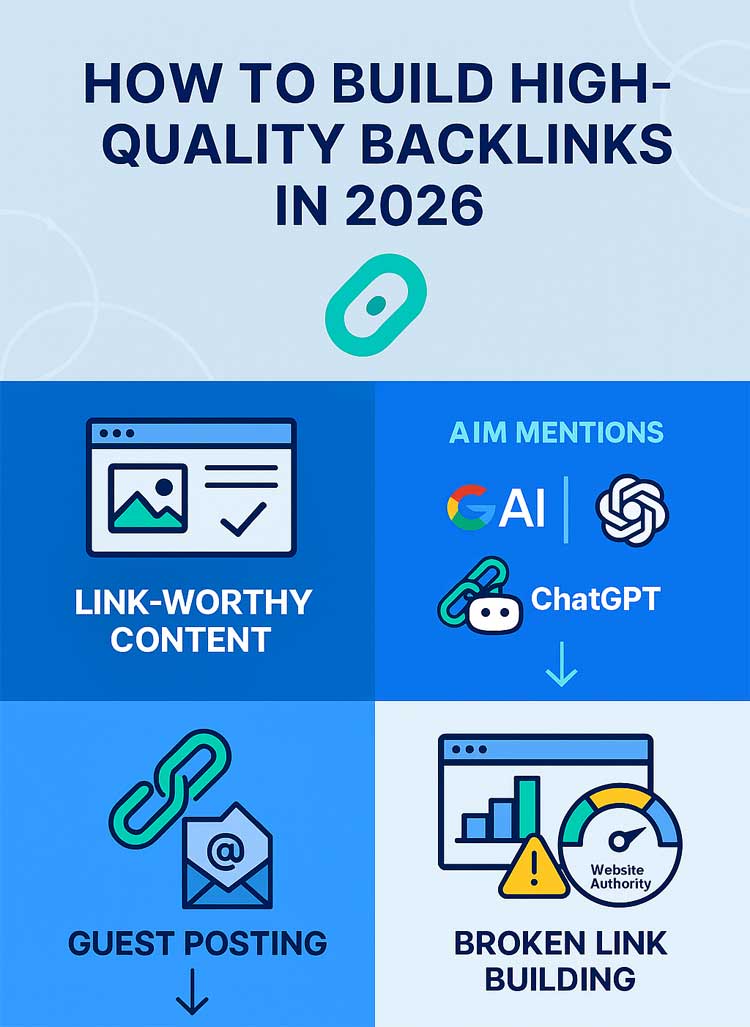
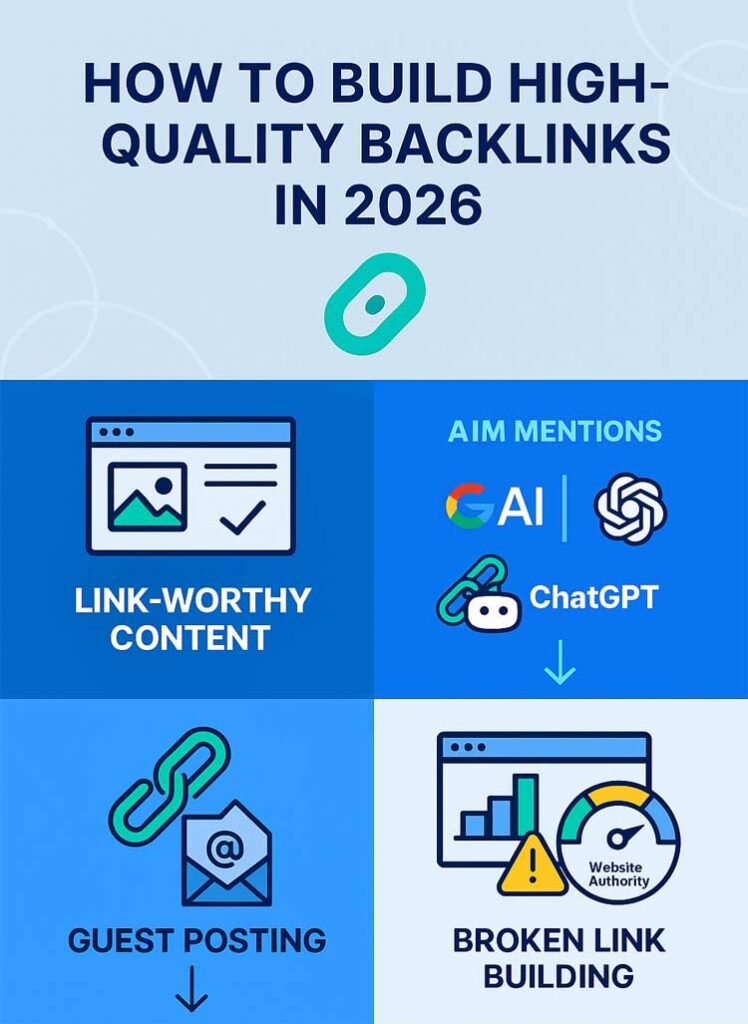
1️⃣ Create Link-Worthy Content
The foundation of link-building is content worth linking to.
Examples:
- Original data or case studies (e.g., “2026 SEO Trends Report”)
- In-depth guides (“Complete Keyword Research Tutorial”)
- Free tools (like Backlink Checker Tool)
💬 When people find value, they naturally link back to you.
2️⃣ Guest Posting on Authoritative Sites
Write high-quality guest articles for industry-leading blogs.
Steps:
- Find websites with a “Write for Us” or “Contribute” page.
- Pitch unique, value-driven topics.
- Add contextual backlinks naturally inside your post.
💡 Example: Writing a guest post for “Ahrefs Blog” or “Search Engine Journal” about SEO trends.
3️⃣ Use Broken Link Building
This method involves finding broken links on other websites and suggesting your content as a replacement.
Tools to use:
- Ahrefs Broken Link Checker
- Backlink Generator Tool
Example Email Template:
“Hey [Name], I noticed a broken link in your article about SEO tools.
We recently published a similar resource that might help your readers.”
Result: You earn a relevant backlink while helping the site owner fix an issue.
4️⃣ Leverage HARO (Help a Reporter Out)
Connect with journalists and get featured on news sites.
✅ Steps:
- Sign up at helpareporter.com
- Respond to relevant queries in your industry
- Get backlinks from high-authority publications
💡 Example: A journalist quotes your SEO tip and links back to small-seo-tool.com
5️⃣ Build Relationships (Not Just Links)
Engage with influencers, comment on blogs, share others’ content, and build trust.
Once relationships are strong, natural backlinks often follow.
6️⃣ Utilize Social Media for Link Building
Share your content across platforms like LinkedIn, X (Twitter), and Reddit.
Even though social links are No-Follow, they increase your visibility and attract organic Do-Follow backlinks from content curators.
7️⃣ Create Linkable Assets
Offer free SEO tools, templates, infographics, or guides.
For example:
👉 “Free On-Page SEO Checklist” from small-seo-tool.com
People love sharing valuable resources, naturally earning you backlinks.
Example: High-Quality vs. Low-Quality Backlink
| Type | Example | Impact |
|---|---|---|
| High-Quality | Link from a top SEO blog citing your tool | Boosts ranking & trust |
| Low-Quality | Link from a spam directory or PBN | Can trigger Google penalty |
💡 Always prioritize relevance, authority, and context over quantity.
Internal Backlink Tip
After earning backlinks, use internal links to pass authority to other pages.
👉 Example: From your “SEO Tools” page, link to your “Backlink Generator” or “Keyword Research Tool.”
Try our Free Internal Link Optimizer to check link structure on your site.
FAQs About High-Quality Backlinks
Q1: How many backlinks do I need to rank on Google?
It depends on your competition. Focus on quality over quantity—a few powerful backlinks can outperform 100 low-quality ones.
Q2: Are backlinks still important in 2026?
Absolutely. Google still uses backlinks as a major ranking signal, but prefers natural and relevant links.
Q3: How can I check my backlinks?
Use our Free Backlink Checker Tool to monitor your backlink profile anytime.
Q4: Do No-Follow backlinks help SEO?
Yes, indirectly—they bring traffic and brand exposure.
Q5: Can buying backlinks hurt my SEO?
Yes. Paid or spammy backlinks can lead to Google penalties. Always focus on organic link-building.
Conclusion
Building high-quality backlinks in 2026 is all about earning trust, not manipulating rankings.
Focus on:
- Value-first content
- Genuine relationships
- White-hat outreach
By following these strategies, you’ll not only increase rankings but also build a sustainable SEO foundation for years to come.
👉 Start improving your backlink profile today with our free SEO Backlink Checker and Backlink Generator Tool.
Related Articles