Key Takeaways
- Define Search Engine Optimization (SEO)—the practice of improving website visibility in organic search results by optimizing content, technical structure, and authority signals.Explain the difference between organic vs paid traffic, the value of SEO in 2025, and why businesses rely on it for sustainable growth.
- Power Keywords: what is SEO, search engine optimization meaning, organic SEO definitionWhy SEO MattersDetail SEO’s role in driving organic traffic, increasing conversions, building brand awareness, and reducing paid ad costs.
- Cite small business stats and advantages.Describe how SEO aligns with Google’s E‑A‑T and algorithmic priorities in modern search.
- Power Keywords: SEO importance, benefits of SEO, SEO value for small businessHow Search Engines WorkBreak down the crawl-index-rank process: bots, algorithms, PageRank, relevance, and trust signals.Describe white‑hat vs black‑hat SEO techniques and risks of spam and penalties.
- Power Keywords: how search engines work, PageRank SEO, white hat SEO, SEO algorithmsCore Components of SEO‑ Keyword Research & ClusteringExplain tools and techniques to find relevant terms, long‑tail keywords, using keyword clustering for content structure .
- ‑ On‑Page SEOSEO best practices: title tags, meta descriptions, header tags, URL structure, internal linking (link to other pages/tools on Small-SEO-Tool.com: e.g.
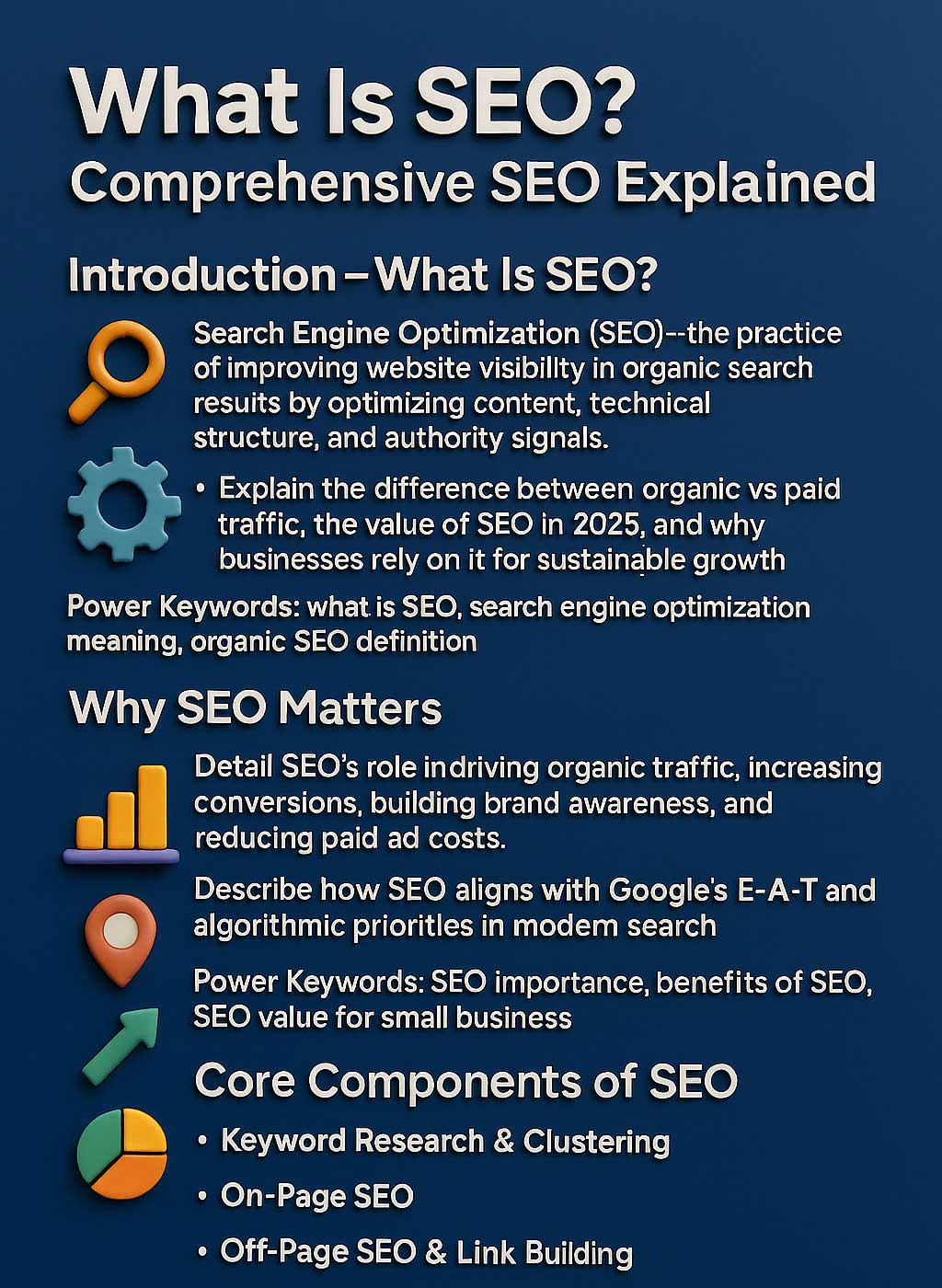
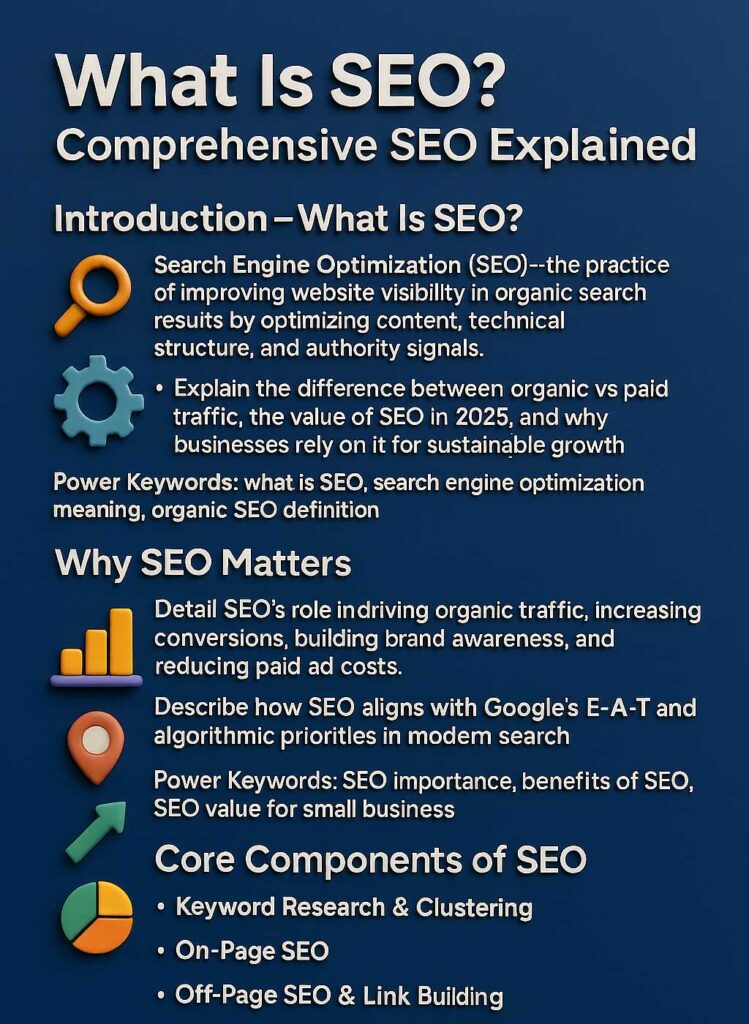
What Is SEO? | Comprehensive SEO Explained
Introduction – What Is SEO?
Define Search Engine Optimization (SEO)—the practice of improving website visibility in organic search results by optimizing content, technical structure, and authority signals.
Explain the difference between organic vs paid traffic, the value of SEO in 2025, and why businesses rely on it for sustainable growth.
Power Keywords: what is SEO, search engine optimization meaning, organic SEO definition
Why SEO Matters
Detail SEO’s role in driving organic traffic, increasing conversions, building brand awareness, and reducing paid ad costs. Cite small business stats and advantages.
Describe how SEO aligns with Google’s E‑A‑T and algorithmic priorities in modern search.
Power Keywords: SEO importance, benefits of SEO, SEO value for small business
How Search Engines Work
Break down the crawl-index-rank process: bots, algorithms, PageRank, relevance, and trust signals.
Describe white‑hat vs black‑hat SEO techniques and risks of spam and penalties.
Power Keywords: how search engines work, PageRank SEO, white hat SEO, SEO algorithms
Core Components of SEO
‑ Keyword Research & Clustering
Explain tools and techniques to find relevant terms, long‑tail keywords, using keyword clustering for content structure .
‑ On‑Page SEO
SEO best practices: title tags, meta descriptions, header tags, URL structure, internal linking (link to other pages/tools on Small-SEO-Tool.com: e.g. SEO Audit Tool, Keyword Suggestions Tool)
Including alt text, keyword placement, readability, power keywords such as on-page SEO, meta tag optimization, internal linking strategy.
‑ Technical SEO
Site speed, mobile usability, XML sitemap, robots.txt, schema markup, crawlability and HTTPS.
‑ Off‑Page SEO & Link Building
Domain authority, backlinks strategy, anchor text diversity, ethical outreach, using the Backlink Checker Tool. Social signals and brand mentions via modern optimization.
Modern Trends: AI & Generative Optimization
Discuss Generative Engine Optimization (GEO): optimizing for AI‑driven answer engines like ChatGPT, structured data, zero‑click results and featured snippets.
Touch on video SEO, local SEO, voice search, and international audience targeting.
Step‑By‑Step SEO Starter Guide
- Define SEO objectives based on niche or industry.
- Conduct keyword research → keyword clustering strategy.
- Optimize a sample page using on‑page SEO best practices and tools like Meta Tag Generator.
- Run a technical SEO audit using the Website SEO Score Checker.
- Build link building campaign, use Backlink Checker Tool.
- Monitor performance via forbidden simple internal link to Rank Tracker, Google Search Console, Analytics.
- Iterate and refresh content every 3‑6 months with updated keywords and stats.
Internal Backlink Strategy example
Use contextual links:
- “Run an audit with the Domain Authority Checker”
- “Discover new keywords using the Keyword Research Tool”
- “Check your backlink profile with Backlink Checker”
- “Track rankings using our Rank Tracker”
Case Study Snapshot (expandable for word‑count)
Summarize a hypothetical local service or small business that used your tools to boost rankings. Show before/after metrics: traffic uplift, keyword gains, domain authority improvements.
Additional SEO Tools & Resources
Reference your suite: SEO Score Checker, Keyword Suggestion Tool, DA/PA Checker, Sitemap Generator, Meta Tag Generator, Rank Tracker.
Compare free vs premium options, include citations from tool reviews.
Frequently Asked Questions (FAQs)
Q1: What is SEO and how does it work?
A: SEO (“Search Engine Optimization”) is the practice of improving website visibility in organic search results through on‑page optimization, technical enhancements, quality content, and authoritative backlinks. It operates via crawling, indexing, and ranking signals that evaluate relevance and trust
Q2: How long will it take to see SEO results?
A: Typically 3–6 months for meaningful gains, depending on competition, content quality, and consistent optimization.
Q3: Can I do SEO on my own?
A: Yes! Start by using free tools on Small‑SEO‑Tool.com—conduct keyword research, do technical audits, optimize page content, and monitor results.
Q4: What are white‑hat vs black‑hat techniques?
A: White-hat SEO follows search engine guidelines (ethical), while black-hat involves manipulative tactics (spammy keywords, hidden text, link schemes). White-hat yields long-lasting results.
Q5: Why is internal linking important?
A: Internal links help distribute link equity, support content hierarchy, and assist crawlability across your site.
Q6: Isn’t SEO dead with AI and voice search?
A: Not at all—SEO evolves. Modern strategies include GEO, structured data, voice and mobile optimization. Quality, relevance, and user experience remain pivotal.
what is SEO, SEO explained, search engine optimization definition, SEO meaning, beginner SEO guide, SEO tutorial, SEO tools
Conclusion & Next Steps
Understanding “What is SEO?” is your first milestone in building an effective long-term search visibility strategy. Start with foundational keyword research, enhance your site’s on-page and technical health, produce valuable content, earn authoritative backlinks, and continuously track progress.
Get started now:
🔗 Run a free audit via our Website keyword Score Checker
🔗 Discover new ranking keywords using our Keyword Research Tool
Begin your path to organic growth—and rank with confidence.
Related Articles