Key Takeaways
- In SEO (Search Engine Optimization), links are the pathways search engines use to crawl and understand web content.A No-Follow link is a hyperlink that tells search engines not to pass authority (PageRank) from the linking site to the linked page.
- It’s defined using a simple attribute in HTML:<a href="https://example.com" rel="nofollow">Example Link</a>This tag signals search engines like Google:“Don’t follow this link or count it as a ranking vote.”Why No-Follow Links ExistThe No-Follow attribute was introduced by Google in 2005 to combat spammy link-building (especially in blog comments and forums).
- Without this attribute, every link was treated as a ranking signal, which led to manipulative SEO tactics.
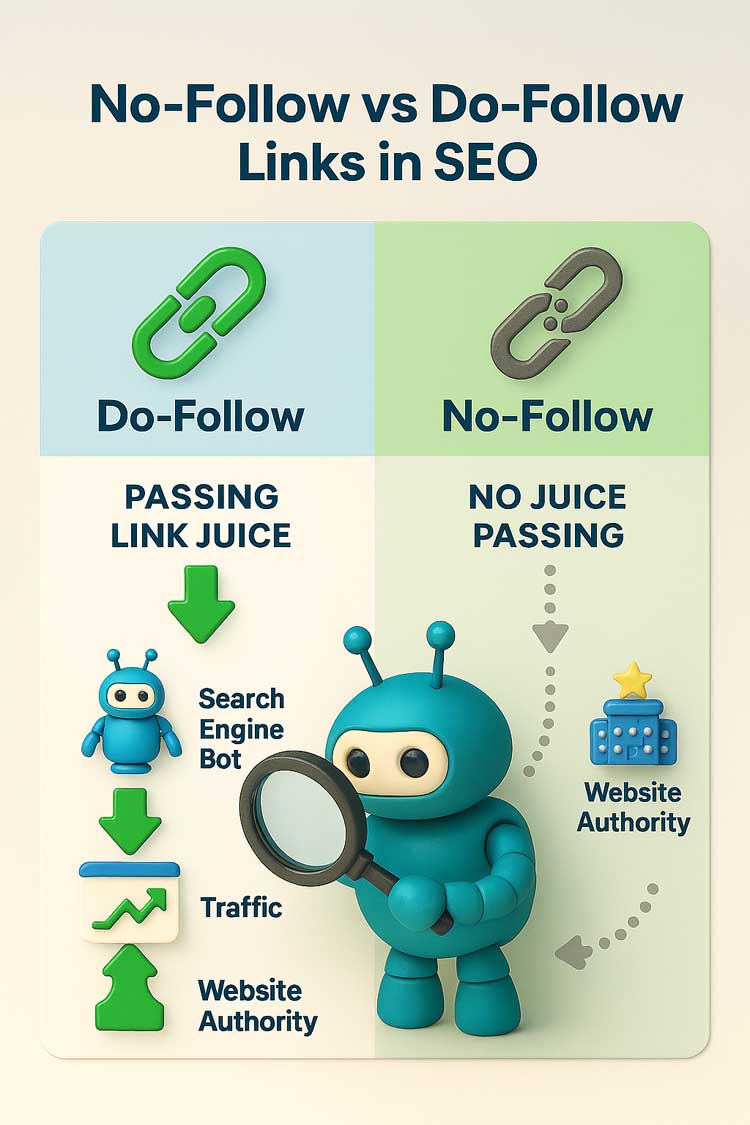
- Today, No-Follow links are commonly used in:Blog commentsSponsored contentPaid advertisementsSocial media links (Twitter, Facebook, Instagram bios)User-generated content (forums, Q&A sites like Quora)How No-Follow Links Work in Search EnginesWhen a search engine crawler finds a No-Follow link:It may crawl the URL, butIt doesn’t transfer authority or link juice to the linked website.
- However, since Google’s 2019 update, No-Follow links are treated as “hints”, meaning Google may still consider them when evaluating page relevance and authority.
- no follow links SEO, dofollow vs nofollow backlinks, nofollow tag example, how nofollow links work, SEO link building, nofollow backlinks meaning, nofollow links importanceDifference Between Do-Follow and No-Follow LinksFeatureDo-Follow LinkNo-Follow LinkPasses SEO authority✅ Yes❌ NoHelps with ranking✅ Yes⚠️ LimitedUsed in paid content❌ No✅ YesExample<a href="url"><a href="url" rel="nofollow">👉 What Are Backlinks and Why Are They Crucial for SEO?
What Are No-Follow Links in SEO?
In SEO (Search Engine Optimization), links are the pathways search engines use to crawl and understand web content.
A No-Follow link is a hyperlink that tells search engines not to pass authority (PageRank) from the linking site to the linked page.
It’s defined using a simple attribute in HTML:
<a href="https://example.com" rel="nofollow">Example Link</a>
This tag signals search engines like Google:
“Don’t follow this link or count it as a ranking vote.”
Why No-Follow Links Exist
The No-Follow attribute was introduced by Google in 2005 to combat spammy link-building (especially in blog comments and forums).
Without this attribute, every link was treated as a ranking signal, which led to manipulative SEO tactics.
Today, No-Follow links are commonly used in:
- Blog comments
- Sponsored content
- Paid advertisements
- Social media links (Twitter, Facebook, Instagram bios)
- User-generated content (forums, Q&A sites like Quora)
How No-Follow Links Work in Search Engines
When a search engine crawler finds a No-Follow link:
- It may crawl the URL, but
- It doesn’t transfer authority or link juice to the linked website.
However, since Google’s 2019 update, No-Follow links are treated as “hints”, meaning Google may still consider them when evaluating page relevance and authority.
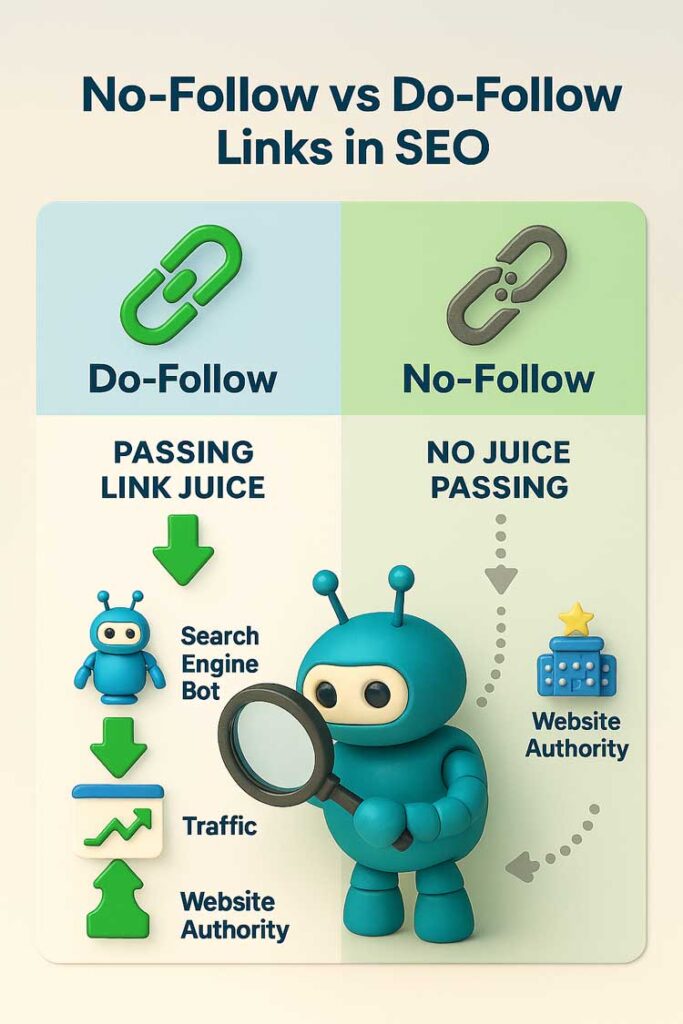
Difference Between Do-Follow and No-Follow Links
| Feature | Do-Follow Link | No-Follow Link |
|---|---|---|
| Passes SEO authority | ✅ Yes | ❌ No |
| Helps with ranking | ✅ Yes | ⚠️ Limited |
| Used in paid content | ❌ No | ✅ Yes |
| Example | <a href="url"> | <a href="url" rel="nofollow"> |
👉 What Are Backlinks and Why Are They Crucial for SEO?
Example: Do-Follow vs No-Follow in Action
Scenario:
You write a guest post on a high-authority site and get two links:
- One is a Do-Follow link to your homepage.
- One is a No-Follow link to your product page.
👉 Result:
The Do-Follow link boosts your ranking directly.
The No-Follow link might bring traffic and brand awareness, but not PageRank authority.
SEO Benefits of No-Follow Links
Even though No-Follow links don’t transfer “link juice,” they are not useless. They can still:
- Drive referral traffic from high-traffic sites
- Diversify your link profile (looks more natural to Google)
- Increase brand exposure
- Lead to future Do-Follow opportunities
👉 For example, a link from a Wikipedia or Reddit page (No-Follow) can still send targeted visitors and boost brand trust.
How to Check If a Link Is No-Follow
Use the Backlink Checker Tool to identify which links to your site are Do-Follow or No-Follow.
You can also manually check:
- Right-click a link → “Inspect”
- Look for
rel="nofollow"in the HTML code
no follow links SEO, dofollow vs nofollow backlinks, nofollow tag example, how nofollow links work, SEO link building, nofollow backlinks meaning, nofollow links importance
Best Practices for Using No-Follow Links
- Add No-Follow to Paid Links
Prevent search engine penalties for buying or selling links. - Use for Untrusted User-Generated Content
Example: blog comments, forums, or guest posts. - Combine with Do-Follow for Balance
A natural backlink profile includes both. - Monitor Regularly
Track link quality using SEO tools like ours to stay penalty-free.
Real-Life Example of Smart No-Follow Usage
Example:
A digital marketing blog includes a sponsored post linking to a partner website.
The blog uses:
<a href="https://partner.com" rel="nofollow sponsored">Partner Site</a>
✅ Benefit:
- Complies with Google’s link guidelines
- Maintains brand partnership transparency
- Avoids penalties
Google Penalties for Misusing No-Follow Links
If you don’t use No-Follow where needed (like paid or sponsored links), Google may issue a manual penalty for “unnatural outbound links.”
💡 Tip: Always tag paid or affiliate links as:
rel="nofollow sponsored"
Want to improve your site’s link profile?
👉 Check out our free Backlink Generator Tool to create natural, safe backlinks that boost your domain authority.
FAQs About No-Follow Links
Q1: Do No-Follow links help SEO?
Yes, indirectly. They help with referral traffic, branding, and link diversity.
Q2: Should I remove No-Follow links from my site?
No. They protect your site from spam and unnatural link penalties.
Q3: Can a No-Follow link become Do-Follow later?
Yes, if the site owner removes the “nofollow” attribute.
Q4: How many No-Follow links should I have?
There’s no exact number. Aim for a balanced link profile (70% Do-Follow, 30% No-Follow).
Q5: Do social media links count as No-Follow?
Yes. Platforms like Facebook, Instagram, and Twitter automatically apply “nofollow” to all links.
Conclusion
No-Follow links may not directly boost rankings, but they build credibility, visibility, and long-term authority when used correctly.
A healthy SEO strategy combines Do-Follow + No-Follow links to look natural and sustainable.
👉 Start tracking your backlinks today with our free SEO Backlink Checker to identify link types and improve your SEO performance.
Related Articles